I was listening to some podcasts on guidonps.com. The speaker is Ron Wince, CEO of Guidon Performance Solutions. Some worthwhile nuggets from what I heard.
It seems everyone in healthcare is jumping on to LSS bandwagon, but mostly it has been used as a tactical toolbox until now. Off late people are realizing that they need to learn to do it well. LSS seems to be the bridge to bring about the socio-technical change. Hospitals are under pressure for a long time for reimbursement, cost and revenue realization. Health reform is driving this urgency. Key drivers pushing LSS adoption are (http://www.ache.org/pubs/research/ceoissues.cfm)
# Changes in revenue model from inpatient to outpatient
# Reimbursement rates going down
# Transparency issues
# Consumer education
# EMR adoption(financial incentives at risk)
It seems that current health reform will call for a management/financial reform.
Continuous Improvement seems to be something we must do everyday, but not everyone is mature enough to think that way. CI is about making the jump up from the last achieved level. Voice of the customer is the only guide to CI initiative. It is not uncommon to see that CI being a knee jerk response to a crisis. LSS is a combination of process refinement and leadership committment to work ON the business and not merely work IN the business. Is measurement an obsession or do we need a balance between results and KPI. Typically only 5% of the work done by an organization is value adding from a customer point of view !!!!!!!!!. 50% of the non value added activity can really be rid of immediately (it is neither regulotory nor compliance).
The IT footprint (human resources) in the healthcare providers is low and there will be a strong need for contracted IT. The health IT companies are likely to do well in the coming times. It is likely to take anywhere between 10 to 20 years before the healhcare bill to be implemented.
Showing posts with label Reform. Show all posts
Showing posts with label Reform. Show all posts
Monday, January 31, 2011

Tuesday, December 1, 2009
Addressing Quality in Health Delivery Part 2
IV. ELEMENTS OF QUALITY IN A PROVIDER SETTING
Within a provider setting, quality can be scrutinized in a number of functions.
1. Information Management – Any judgement is only as good as the information on which it is based. Healthcare is no exception. Disparities in provision of care can be minimized by carefully managing information. Some of the ways are given below[5]
a. Stratify clinical performance measures according to socioeconomic/ethnic disparities
b. Make information available for public reporting
c. Synchronize data collection efforts
2. Create an alternative for fee for service - The fee-for-service payment system in the United States leads to more care, but fails to create high-quality and efficient care. Some of the alternatives include
a. A new payment model based on a set of severity adjusted evidence-informed case rates (ECR). Risks maybe categorized as [6] –
i. Probability risk (Based on the likelihood of a negative event not controlled by the provider). Example: genetic makeup of the patient. This will be the financial responsibility of the insurer
ii. Technical risk (Providers responsibility). This includes readmissions. One of five Medicare beneficiaries discharged from the hospital is readmitted within 30 days, and half of non-surgical patients are readmitted to the hospital without having seen an outpatient doctor in follow-up [8].
3. Eliminate process waste through Lean management initiatives – The core idea is to replace waste with value. Value is defined as the capability to deliver exactly the (customized) product or service a customer wants with minimal time between the moment the customer asks for that product or service and the actual delivery at an appropriate price [11]. The key here is that value must be defined from a consumer perspective.
In sum, all quality endeavours point to incremental and sustained integration between interfacing entities in the healthcare provider space. Let us talk about the each of them in brief.
V. INFORMATION MANAGEMENT
Information has to be managed from creation to archival such that it is accurate, contextually relevant, and available in a timely manner. Only such information is of value. Example - Clinical performance measure is a subtype of quality measure and captures data on access, outcome, patient experience, process and structure during episodes of care. Non clinical data such as master patient index are also to be managed with care.
Pros
1. Quality measures are used for process improvement, higher accountability and research
2. Avoid repeat therapy. This is especially valuable in case of indigent care and charity care
Cons
1. Even though these data are collected by institutions they are largely for private use. Public sharing of such information is neither mandated nor voluntarily offered. The reason is that this genre of information is considered to be of competitive advantage and fiercely protected by the providers.
2. The physicians perceive that every patient with associated medical conditions is unique. The nature of relationship between physician and the hospitals are contractual and there are not enough incentives for the physicians to devote additional time towards such initiatives.
3. Data collection puts additional strain on human and technological resources. Smaller institutions may not have the resources to bring in these practices
VI. PAYMENT REFORM – BUNDLED PAYMENT
At the very heart of integrated care is the bundled payment. It would mean more collaborative care. Bundled payments provide a single payment to both hospitals and physicians thereby creating the need for synergy between hospitals and physicians.
Pros
1. 180 degree turnaround on the current mode of payment. Hospitals and physicians, currently paid on separate fee schedules, would now have financial incentives to collaborate and work together.
2. Is likely to bring down the number of readmission through shared accountability
3. Will pave the way for unified billing
Cons
1. Likely to cause a disruption in the current system. Adoption will be slow and recalcitrant. Needs the cultural change of “putting patients first”.
2. Will encourage more hospitals to have physicians on salary and will be resisted by the older generation of physician community. Smaller physician(s) or groups will eventually be driven to join larger groups
3. It is possible that short term cost cutting initiatives will result is degrading the value offered to patients resulting in delayed access.
The Medicare Payment Advisory Commission has created a policy path to transition to bundled payments. This includes [13] [14]:
1. Phasing-in various aspects of bundled payments first, to providers who are fairly well integrated, and then slowly encouraging other providers to adopt the payments.
2. Capture and share service and resource usage data
3. Adjust payment based on resource use over an episode of care on select conditions (acute care)
VII. LEAN MANAGEMENT
Lean is an innovative philosophy that can be applied to the health delivery processes to sustain operational quality and address socio technical issues. Operationally Lean management provides better organization, increased productivity and reduced waste – all encouraging process improvement by reducing process variation. The technical risks or artificial variability has a lot to do with the efficiency of health delivery and often contributes to “waste” in the system.
In the healthcare world, there are multiple definitions to value. The administration may have interest in the quality adjusted life year value while the physician may concern himself only with the clinical value. According to Lean the value is an inherent property of the system at work bounded by design and not by the individual talent or will. Lean initiatives are at the heart of Integrated Care Programs or Pathways.
Pros
1. Artificial variability related to controllable factors is minimized in the design and management of healthcare systems. One example of artificial variability is medication management.
2. By balancing operational and socio-technical aspects of Lean, exponential improvements are possible. Value stream analysis is a good way to make sure the process and the people performing the process are aligned.
3. Will naturally help the evolution of integrated pathways for care and administration
Cons
1. Natural variability of the process is caused by the fact that no two patients are identical. This has to be recognized while applying Lean management in healthcare.
2. The practice of Lean thinking could negatively impact the population of healthcare workers. WHO data suggests there are about 6-7 million healthcare workers in the US including, pharmacists, midwifes, physicians, nurses, lab workers, management and support workers. This can be pre-empted by fostering a culture of Lean and managing change responsibly.
3. Will need information standardization and sharing
4. Healthcare professional are trained to be fiercely independent and need to be aligned to the merits of collaborative care and working in an interdependent environment.
5. Qualified leaders and managers that foster creation of an environment of collaboration are scarce. This manpower is vital for success.
6. Lean is not a piece meal approach but system wide. So it requires top level endorsement. The senior management must trust Lean to increase value for the patient and drive profits.
Socio-technical aspects of Lean - Lean interventions have the potential to make jobs simple and accurately repeatable. Simple jobs may not be found to be challenging enough for highly trained physicians. Lean interventions may also give rise to jobs that require more thinking, planning and responsibility which may be resisted by workers depending on the nature of employer-employee relationship.
VIII. POLITICS AND POLICY OF REFORM – NOW AND ROAD AHEAD
A Commonwealth Fund survey shows the following [19]
1. 70% of the opinion leaders think that the fundamental payment reform is at the root of meaningful reform
2. 62% of the leaders feel that fostering integrated health delivery systems is the most effective way to bring down healthcare costs
The HITECH act is a great example of what the government can do to empower the health delivery systems to build quality in their domain. In the current reform drafts, the president has set a target of 155 billion in costs saving from the hospitals that translates roughly to about 2.6 million per year per hospital in cost savings. Interestingly the hospitals CEOs are upbeat on achieving this target using a variety of methods including Lean [18].
From 1912 till today there have been several attempts at tactical health reforms. These have not been strategic successes because they have been at odds with the core interest and benefits of the Americans at large. In my view, a high level roadmap could be as follows:
1. Bring on payment reform through bundled payments. Government must help providers to structure themselves to adopt the new payment mechanism. Hospitals will play along if they are incentivized as with HITECH Act to work in a collaborative model. It will bring up new models of nurses-physician-hospital/group engagement.
2. Create incentives to adopt integrated delivery systems with targets to reduce adjusted cost per episode of care, year on year. The government will struggle to make this objective and set up outcomes reporting mechanism.
3. Create health exchange to share information from both insurance and provider. It will have ample support from consumers and insurers, who will begin to enjoy more choices among providers. Hospitals will drag their feet because it would means sharing of competitive information. They will come along as they see its merits in providing indigent care. The government will have the opportunity to conduct evidence based research using this data to arrive at setting national levels of care and reimbursement guidelines.
Some of the factors that can aid the reform can be
• Continued tort reform like putting a limit of the economic damages
• Decrease “morale hazard” by getting the consumers to have a stake in keeping the cost of healthcare spending down (perhaps through health savings accounts)
• Putting a cap on the administrative costs of insurers.
The steps above is likely to result in reduction of redundant therapy (repeat imaging services), address over-reimbursements issues, expand the scope of practice for non physicians, reduce medical errors and create incentives for preventive medicine. Subsequent to the quality based reform, the government can proceed with legislations to increase coverage and introduce public option. For now moving the reform on the quality angle allows us to keep the value of healthcare proportional to the cost – a proposition that will resonate with the most Americans.
IX. REFERENCE
[1] Socialism vs. Capitalism: Which is the Moral System? On Principle, v1n3 October 1993 by: C. Bradley Thompson. [Available] http://www.ashbrook.org/publicat/onprin/v1n3/thompson.html
[2] Public Health Then and Now January 2003, Vol. 93, No. 1 | American Journal of Public Health by: Beatrix Hoffman, PhD [Available] http://www.ajph.org/cgi/content/abstract/93/1/75
[3] About that health-reform cost study Tuesday, October 20, 2009: by Karen Ignagni. [Available] http://www.washingtonpost.com/wp-dyn/content/article/2009/10/19/AR2009101902936.html
[4] Inequality in quality: addressing socioeconomic, racial, and ethnic disparities in health care. JAMA. 2000 May 17;283(19):2579-84: by Fiscella K, Franks P, Gold MR, Clancy CM. [Available] http://www.ncbi.nlm.nih.gov/pubmed/10815125
[5] Lean and Collaborative care at Thedacare. [Available] http://www.leanblog.org/2009/10/lean-collaborative-care-at-thedacare.html
[6] Francois de Brantes: A New Payment Model for the U.S. [Available] http://www.commonwealthfund.org/Topics/Health-Care-Quality.aspx
[7] The Nation’s Health Dollar, Calendar Year 2007: Where it Went? [Available] http://www.cms.hhs.gov/NationalHealthExpendData/downloads/PieChartSourcesExpenditures2007.pdf
[8] New Study: 20 Percent of Hospitalized Medicare Patients Readmitted To Hospital Within 30 Days; Half Rehospitalized Without Seeing a Doctor After Discharge. [Available] http://www.commonwealthfund.org/Content/News/News-Releases/2009/New-Study-20-Percent-of-Hospitalized-Medicare-Patients-Readmitted-To-Hospital-Within-30-Days.aspx
[9] Change the Microenvironment: Delivery System Reform Essential to Controlling Costs. [Available] http://www.commonwealthfund.org/Content/Publications/Commentaries/2009/Apr/Change-the-Microenvironment.aspx
[10] State wise per capita income. [Available] http://www.bea.gov/newsreleases/regional/spi/2009/pdf/spi1009pc_fax.pdf
[11] Application of lean thinking to health care: Issues and observations [Available]: International Journal for Quality in Health Care 2009; Volume 21, Number 5: pp. 341–347 Advance Access Publication: 19 August 2009
[12] Using Measures. [Available] http://www.qualitymeasures.ahrq.gov/resources/measure_use.aspx
[13] Bundled Payment. [Available] http://www.andrew.cmu.edu/user/aspark/policyarea.html
[14] MedPac [Available] http://www.medpac.gov/transcripts/0408_pathtobundling_public_pres.pdf
[15] WHO [Available] http://apps.who.int/globalatlas/dataQuery/reportData.asp?rptType=3
[16] Wikipedia QALY [Available] http://en.wikipedia.org/wiki/Quality-adjusted_life_year
[17] Going Lean in Health Care. IHI Innovation Series white paper. Cambridge, MA: Institute for Healthcare Improvement; 2005. [Available] http://www.IHI.org
[18] Hospital CEOs: Reform savings goals doable with lean, Six Sigma, Toyota methods. [Available]
http://www.fiercehealthfinance.com/story/hospital-ceos-reform-savings-goals-doable-lean-six-sigma-toyota-methods/2009-09-10
[19] Commonwealth Fund. Commonwealth Fund Health Care Opinion Leaders Survey, April 2009. HCOL_Slowing_Growth_of_HC_Costs__Chart_Pack_Slides_04242009_PF [Available] www.commonwealthfund.org
[20] AEI Outlook Series: The Politics and Principles of Health Care Reform by Joseph Antos [Available] http://www.aei.org/docLib/11-HPO-Antos-Sept-09-g.pdf
Within a provider setting, quality can be scrutinized in a number of functions.
1. Information Management – Any judgement is only as good as the information on which it is based. Healthcare is no exception. Disparities in provision of care can be minimized by carefully managing information. Some of the ways are given below[5]
a. Stratify clinical performance measures according to socioeconomic/ethnic disparities
b. Make information available for public reporting
c. Synchronize data collection efforts
2. Create an alternative for fee for service - The fee-for-service payment system in the United States leads to more care, but fails to create high-quality and efficient care. Some of the alternatives include
a. A new payment model based on a set of severity adjusted evidence-informed case rates (ECR). Risks maybe categorized as [6] –
i. Probability risk (Based on the likelihood of a negative event not controlled by the provider). Example: genetic makeup of the patient. This will be the financial responsibility of the insurer
ii. Technical risk (Providers responsibility). This includes readmissions. One of five Medicare beneficiaries discharged from the hospital is readmitted within 30 days, and half of non-surgical patients are readmitted to the hospital without having seen an outpatient doctor in follow-up [8].
3. Eliminate process waste through Lean management initiatives – The core idea is to replace waste with value. Value is defined as the capability to deliver exactly the (customized) product or service a customer wants with minimal time between the moment the customer asks for that product or service and the actual delivery at an appropriate price [11]. The key here is that value must be defined from a consumer perspective.
In sum, all quality endeavours point to incremental and sustained integration between interfacing entities in the healthcare provider space. Let us talk about the each of them in brief.
V. INFORMATION MANAGEMENT
Information has to be managed from creation to archival such that it is accurate, contextually relevant, and available in a timely manner. Only such information is of value. Example - Clinical performance measure is a subtype of quality measure and captures data on access, outcome, patient experience, process and structure during episodes of care. Non clinical data such as master patient index are also to be managed with care.
Pros
1. Quality measures are used for process improvement, higher accountability and research
2. Avoid repeat therapy. This is especially valuable in case of indigent care and charity care
Cons
1. Even though these data are collected by institutions they are largely for private use. Public sharing of such information is neither mandated nor voluntarily offered. The reason is that this genre of information is considered to be of competitive advantage and fiercely protected by the providers.
2. The physicians perceive that every patient with associated medical conditions is unique. The nature of relationship between physician and the hospitals are contractual and there are not enough incentives for the physicians to devote additional time towards such initiatives.
3. Data collection puts additional strain on human and technological resources. Smaller institutions may not have the resources to bring in these practices
VI. PAYMENT REFORM – BUNDLED PAYMENT
At the very heart of integrated care is the bundled payment. It would mean more collaborative care. Bundled payments provide a single payment to both hospitals and physicians thereby creating the need for synergy between hospitals and physicians.
Pros
1. 180 degree turnaround on the current mode of payment. Hospitals and physicians, currently paid on separate fee schedules, would now have financial incentives to collaborate and work together.
2. Is likely to bring down the number of readmission through shared accountability
3. Will pave the way for unified billing
Cons
1. Likely to cause a disruption in the current system. Adoption will be slow and recalcitrant. Needs the cultural change of “putting patients first”.
2. Will encourage more hospitals to have physicians on salary and will be resisted by the older generation of physician community. Smaller physician(s) or groups will eventually be driven to join larger groups
3. It is possible that short term cost cutting initiatives will result is degrading the value offered to patients resulting in delayed access.
The Medicare Payment Advisory Commission has created a policy path to transition to bundled payments. This includes [13] [14]:
1. Phasing-in various aspects of bundled payments first, to providers who are fairly well integrated, and then slowly encouraging other providers to adopt the payments.
2. Capture and share service and resource usage data
3. Adjust payment based on resource use over an episode of care on select conditions (acute care)
VII. LEAN MANAGEMENT
Lean is an innovative philosophy that can be applied to the health delivery processes to sustain operational quality and address socio technical issues. Operationally Lean management provides better organization, increased productivity and reduced waste – all encouraging process improvement by reducing process variation. The technical risks or artificial variability has a lot to do with the efficiency of health delivery and often contributes to “waste” in the system.
In the healthcare world, there are multiple definitions to value. The administration may have interest in the quality adjusted life year value while the physician may concern himself only with the clinical value. According to Lean the value is an inherent property of the system at work bounded by design and not by the individual talent or will. Lean initiatives are at the heart of Integrated Care Programs or Pathways.
Pros
1. Artificial variability related to controllable factors is minimized in the design and management of healthcare systems. One example of artificial variability is medication management.
2. By balancing operational and socio-technical aspects of Lean, exponential improvements are possible. Value stream analysis is a good way to make sure the process and the people performing the process are aligned.
3. Will naturally help the evolution of integrated pathways for care and administration
Cons
1. Natural variability of the process is caused by the fact that no two patients are identical. This has to be recognized while applying Lean management in healthcare.
2. The practice of Lean thinking could negatively impact the population of healthcare workers. WHO data suggests there are about 6-7 million healthcare workers in the US including, pharmacists, midwifes, physicians, nurses, lab workers, management and support workers. This can be pre-empted by fostering a culture of Lean and managing change responsibly.
3. Will need information standardization and sharing
4. Healthcare professional are trained to be fiercely independent and need to be aligned to the merits of collaborative care and working in an interdependent environment.
5. Qualified leaders and managers that foster creation of an environment of collaboration are scarce. This manpower is vital for success.
6. Lean is not a piece meal approach but system wide. So it requires top level endorsement. The senior management must trust Lean to increase value for the patient and drive profits.
Socio-technical aspects of Lean - Lean interventions have the potential to make jobs simple and accurately repeatable. Simple jobs may not be found to be challenging enough for highly trained physicians. Lean interventions may also give rise to jobs that require more thinking, planning and responsibility which may be resisted by workers depending on the nature of employer-employee relationship.
VIII. POLITICS AND POLICY OF REFORM – NOW AND ROAD AHEAD
A Commonwealth Fund survey shows the following [19]
1. 70% of the opinion leaders think that the fundamental payment reform is at the root of meaningful reform
2. 62% of the leaders feel that fostering integrated health delivery systems is the most effective way to bring down healthcare costs
The HITECH act is a great example of what the government can do to empower the health delivery systems to build quality in their domain. In the current reform drafts, the president has set a target of 155 billion in costs saving from the hospitals that translates roughly to about 2.6 million per year per hospital in cost savings. Interestingly the hospitals CEOs are upbeat on achieving this target using a variety of methods including Lean [18].
From 1912 till today there have been several attempts at tactical health reforms. These have not been strategic successes because they have been at odds with the core interest and benefits of the Americans at large. In my view, a high level roadmap could be as follows:
1. Bring on payment reform through bundled payments. Government must help providers to structure themselves to adopt the new payment mechanism. Hospitals will play along if they are incentivized as with HITECH Act to work in a collaborative model. It will bring up new models of nurses-physician-hospital/group engagement.
2. Create incentives to adopt integrated delivery systems with targets to reduce adjusted cost per episode of care, year on year. The government will struggle to make this objective and set up outcomes reporting mechanism.
3. Create health exchange to share information from both insurance and provider. It will have ample support from consumers and insurers, who will begin to enjoy more choices among providers. Hospitals will drag their feet because it would means sharing of competitive information. They will come along as they see its merits in providing indigent care. The government will have the opportunity to conduct evidence based research using this data to arrive at setting national levels of care and reimbursement guidelines.
Some of the factors that can aid the reform can be
• Continued tort reform like putting a limit of the economic damages
• Decrease “morale hazard” by getting the consumers to have a stake in keeping the cost of healthcare spending down (perhaps through health savings accounts)
• Putting a cap on the administrative costs of insurers.
The steps above is likely to result in reduction of redundant therapy (repeat imaging services), address over-reimbursements issues, expand the scope of practice for non physicians, reduce medical errors and create incentives for preventive medicine. Subsequent to the quality based reform, the government can proceed with legislations to increase coverage and introduce public option. For now moving the reform on the quality angle allows us to keep the value of healthcare proportional to the cost – a proposition that will resonate with the most Americans.
IX. REFERENCE
[1] Socialism vs. Capitalism: Which is the Moral System? On Principle, v1n3 October 1993 by: C. Bradley Thompson. [Available] http://www.ashbrook.org/publicat/onprin/v1n3/thompson.html
[2] Public Health Then and Now January 2003, Vol. 93, No. 1 | American Journal of Public Health by: Beatrix Hoffman, PhD [Available] http://www.ajph.org/cgi/content/abstract/93/1/75
[3] About that health-reform cost study Tuesday, October 20, 2009: by Karen Ignagni. [Available] http://www.washingtonpost.com/wp-dyn/content/article/2009/10/19/AR2009101902936.html
[4] Inequality in quality: addressing socioeconomic, racial, and ethnic disparities in health care. JAMA. 2000 May 17;283(19):2579-84: by Fiscella K, Franks P, Gold MR, Clancy CM. [Available] http://www.ncbi.nlm.nih.gov/pubmed/10815125
[5] Lean and Collaborative care at Thedacare. [Available] http://www.leanblog.org/2009/10/lean-collaborative-care-at-thedacare.html
[6] Francois de Brantes: A New Payment Model for the U.S. [Available] http://www.commonwealthfund.org/Topics/Health-Care-Quality.aspx
[7] The Nation’s Health Dollar, Calendar Year 2007: Where it Went? [Available] http://www.cms.hhs.gov/NationalHealthExpendData/downloads/PieChartSourcesExpenditures2007.pdf
[8] New Study: 20 Percent of Hospitalized Medicare Patients Readmitted To Hospital Within 30 Days; Half Rehospitalized Without Seeing a Doctor After Discharge. [Available] http://www.commonwealthfund.org/Content/News/News-Releases/2009/New-Study-20-Percent-of-Hospitalized-Medicare-Patients-Readmitted-To-Hospital-Within-30-Days.aspx
[9] Change the Microenvironment: Delivery System Reform Essential to Controlling Costs. [Available] http://www.commonwealthfund.org/Content/Publications/Commentaries/2009/Apr/Change-the-Microenvironment.aspx
[10] State wise per capita income. [Available] http://www.bea.gov/newsreleases/regional/spi/2009/pdf/spi1009pc_fax.pdf
[11] Application of lean thinking to health care: Issues and observations [Available]: International Journal for Quality in Health Care 2009; Volume 21, Number 5: pp. 341–347 Advance Access Publication: 19 August 2009
[12] Using Measures. [Available] http://www.qualitymeasures.ahrq.gov/resources/measure_use.aspx
[13] Bundled Payment. [Available] http://www.andrew.cmu.edu/user/aspark/policyarea.html
[14] MedPac [Available] http://www.medpac.gov/transcripts/0408_pathtobundling_public_pres.pdf
[15] WHO [Available] http://apps.who.int/globalatlas/dataQuery/reportData.asp?rptType=3
[16] Wikipedia QALY [Available] http://en.wikipedia.org/wiki/Quality-adjusted_life_year
[17] Going Lean in Health Care. IHI Innovation Series white paper. Cambridge, MA: Institute for Healthcare Improvement; 2005. [Available] http://www.IHI.org
[18] Hospital CEOs: Reform savings goals doable with lean, Six Sigma, Toyota methods. [Available]
http://www.fiercehealthfinance.com/story/hospital-ceos-reform-savings-goals-doable-lean-six-sigma-toyota-methods/2009-09-10
[19] Commonwealth Fund. Commonwealth Fund Health Care Opinion Leaders Survey, April 2009. HCOL_Slowing_Growth_of_HC_Costs__Chart_Pack_Slides_04242009_PF [Available] www.commonwealthfund.org
[20] AEI Outlook Series: The Politics and Principles of Health Care Reform by Joseph Antos [Available] http://www.aei.org/docLib/11-HPO-Antos-Sept-09-g.pdf
Addressing Quality in Health Delivery Part 1
Abstract: Understand the healthcare reform in the context of the social and economic factors. Analyse the alternatives in the reform and their tradeoffs. Provide a workable framework and discuss its sustainability.
I. BACKGROUND
The current efforts in reform have seen two proposals emerge. Both primarily address the issues around coverage and tried to resonate with American vote bank. This is quite akin to catching a tiger by its tail because the serious cost repercussions associated with addressing coverage is likely to bring on a financial disaster in the near future. A look into the social stratification will help us understand the economic and social preferences of the country.
A. Creation of classes - America has been neither a collectivist (socialist) nor an individualist (capitalist) state. History of America is dotted with experiments in creation of a mixed economy and welfare state - a system that permits private property at the discretion of government planners. As a consequence three classes of people have been created. First - a class that survives on the wealth sourced from the working class - typically includes the indigent and “habitually” unemployed (people who have no motive to earn a livelihood). Second - the working class which is a taxpaying, law abiding segment (includes the non working retirees). Third - a class of government planners and wealthy influencers who are typically at the top of the food chain. [1]
B. Social/Industrial/Economic/Movement – There has been a gap between the healthcare reformers and their political constituencies. So while grass root activism has won minor changes, it has not been able to alter the very nature of the system [2]. The demographics of the patient population, a 500 billion USD insurance industry, vested interests of the members of the Congress to get re-elected, gullibility of the people and dissemination of misinformation by media are some of the factors to be recognized while providing a critical analysis of the health reform.
The raison d'etre of the health reform is to make available a good quality healthcare infrastructure for the people of America and that is possible only when the reform is based on quality frameworks that will reduce cost and make it meaningful for people to get insured. The remainder of the paper will outline one such possible framework.
II. THE ECONOMIC AND SOCIAL FACTORS AT PLAY
The healthcare system today is unstructured and has misplaced financial incentives. The economic theory of “morale hazard” has played out among the players in the current system. As a result the system has been abused by all those who participate in it. Some of the current social and economic factors at work are listed below.
• Social factors
o Aging population, a small percentage of which is consumes most of the healthcare expenses
o Indigent, uninsured and underinsured population resulting in a skewed flow of finances for episodes of care.
o Distorted ratio of care givers between primary and specialty levels
o Providers preferring more number of diagnostic tests to appease patient sentiments and to practice defensive medicine
o Death is viewed not as a natural phenomenon but rather a scientific challenge that needs to be overcome.
• Economic factors
o Cost of care high with respect to outcomes in care rendered in comparison with other developed nations
o Insurance providers have more interest in return on equity than providing indemnity for patients. Currently there are no cross-state plans.
o High cost of medication and lack of medication management
o High cost of education leading to debts that the doctors seek to recover through fee for service reimbursements. The fee-for-service payment mechanism has been recognized as a challenge.
o High cost of compliance for numerous regulations, liability insurance and technology.
o Medication errors, re-admissions and death.
o Declining economy and earnings but increasing sickness is draining the state exchequer.
o Misplaced competition currently focuses on shifting of cost among government, insurer and provider. The competition must be brought back into the provider space so that they are able to bring value to the patients through low cost and high standard of care. This single value driver will give them competitive advantage and consequent market share. Transformation in this segment will positively impact other areas of the healthcare system.
III. STATE OF THE CURRENT REFORM
Coverage Pros
• Requires individuals to have health insurance. It is enforced through individual mandate and by raising the income limit for Medicaid eligibility. Insurance is proposed to be made available through state seeded health gateways or health exchanges. Includes penalties for non compliance and subsidies/exception for special cases
• Employers mandated to offer health insurance or pay a penalty if employee chooses to buy from exchange. Employers to pay at least 60% of the premium.
• Insurers cannot deny coverage on grounds of pre-existing conditions in non group market. Create a high risk pool for all people with pre-existing conditions and cover them through consumer driven co-operatives.
Coverage Cons
• Constitutional hurdle in warranting health insurance as a prerequisite for citizenship.
• Penalty may be lower than the overhead of providing insurance. This could also lead to unintended consequence like retrenching regular employees in favour of subcontractors.
Cost Pros
• No annual and lifetime limits on coverage. Limit on annual spending by the enrollee. Issue community rated insurance plans (premiums charged differ only on basis of age and gender)
• Higher scrutiny of insurance companies.
• Employ payment bundling to contain cost.
• Public option as a competition to private insurance companies
Cost Cons
• Will warrant major regrouping of the insurance companies and the providers. Smaller independent practices will have to merge into larger networks.
• May cause people to defer buying good insurance plans until they become sick.
• Insurance companies will find work around to “cherry pick and lemon drop”
• Younger population likely to pay inflated premiums for coverage not suitable to their circumstances.
• Government run program have historically shot over their budgets [3].
Quality Pros
• Explore bundled payment
• Preventive medicine and evidence based research
Quality Cons
• Objectives are not quantitative and the efforts may not give instant results.
• Unless quality drives are not driven by value directives (low cost, acceptable standard of care resulting in patient well being), it can be counterproductive.
• Hospital and physician services each account for about one third of private healthcare spending [7]. The outcomes do not commensurate to the level of spending seen.
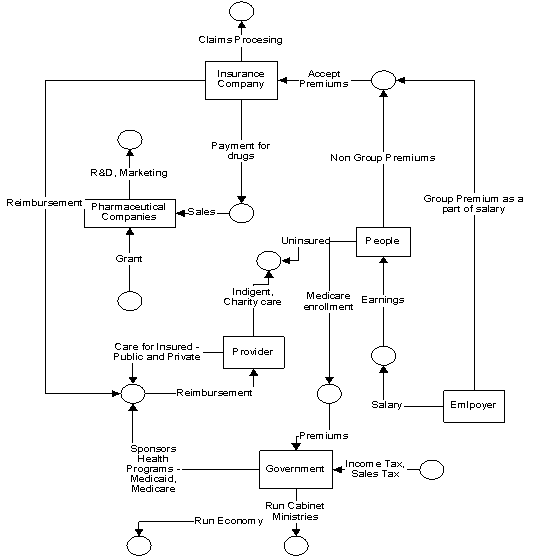
The diagram below depicts a schematic interplay of different actors in healthcare. Though the issues of quality are quite pervasive, this paper will limit itself to the application of quality in the provider space. The problem statement is as follows: What needs to be done in the provider space to ensure every American can get affordable medical care based on their needs (and not on preferences, tastes or wants). In the diagram below, the arrows leaving the rectangle show an outflow of money (Expenses) and the arrows incoming to the rectangle show and inflow of money (Income)

I. BACKGROUND
The current efforts in reform have seen two proposals emerge. Both primarily address the issues around coverage and tried to resonate with American vote bank. This is quite akin to catching a tiger by its tail because the serious cost repercussions associated with addressing coverage is likely to bring on a financial disaster in the near future. A look into the social stratification will help us understand the economic and social preferences of the country.
A. Creation of classes - America has been neither a collectivist (socialist) nor an individualist (capitalist) state. History of America is dotted with experiments in creation of a mixed economy and welfare state - a system that permits private property at the discretion of government planners. As a consequence three classes of people have been created. First - a class that survives on the wealth sourced from the working class - typically includes the indigent and “habitually” unemployed (people who have no motive to earn a livelihood). Second - the working class which is a taxpaying, law abiding segment (includes the non working retirees). Third - a class of government planners and wealthy influencers who are typically at the top of the food chain. [1]
B. Social/Industrial/Economic/Movement – There has been a gap between the healthcare reformers and their political constituencies. So while grass root activism has won minor changes, it has not been able to alter the very nature of the system [2]. The demographics of the patient population, a 500 billion USD insurance industry, vested interests of the members of the Congress to get re-elected, gullibility of the people and dissemination of misinformation by media are some of the factors to be recognized while providing a critical analysis of the health reform.
The raison d'etre of the health reform is to make available a good quality healthcare infrastructure for the people of America and that is possible only when the reform is based on quality frameworks that will reduce cost and make it meaningful for people to get insured. The remainder of the paper will outline one such possible framework.
II. THE ECONOMIC AND SOCIAL FACTORS AT PLAY
The healthcare system today is unstructured and has misplaced financial incentives. The economic theory of “morale hazard” has played out among the players in the current system. As a result the system has been abused by all those who participate in it. Some of the current social and economic factors at work are listed below.
• Social factors
o Aging population, a small percentage of which is consumes most of the healthcare expenses
o Indigent, uninsured and underinsured population resulting in a skewed flow of finances for episodes of care.
o Distorted ratio of care givers between primary and specialty levels
o Providers preferring more number of diagnostic tests to appease patient sentiments and to practice defensive medicine
o Death is viewed not as a natural phenomenon but rather a scientific challenge that needs to be overcome.
• Economic factors
o Cost of care high with respect to outcomes in care rendered in comparison with other developed nations
o Insurance providers have more interest in return on equity than providing indemnity for patients. Currently there are no cross-state plans.
o High cost of medication and lack of medication management
o High cost of education leading to debts that the doctors seek to recover through fee for service reimbursements. The fee-for-service payment mechanism has been recognized as a challenge.
o High cost of compliance for numerous regulations, liability insurance and technology.
o Medication errors, re-admissions and death.
o Declining economy and earnings but increasing sickness is draining the state exchequer.
o Misplaced competition currently focuses on shifting of cost among government, insurer and provider. The competition must be brought back into the provider space so that they are able to bring value to the patients through low cost and high standard of care. This single value driver will give them competitive advantage and consequent market share. Transformation in this segment will positively impact other areas of the healthcare system.
III. STATE OF THE CURRENT REFORM
Coverage Pros
• Requires individuals to have health insurance. It is enforced through individual mandate and by raising the income limit for Medicaid eligibility. Insurance is proposed to be made available through state seeded health gateways or health exchanges. Includes penalties for non compliance and subsidies/exception for special cases
• Employers mandated to offer health insurance or pay a penalty if employee chooses to buy from exchange. Employers to pay at least 60% of the premium.
• Insurers cannot deny coverage on grounds of pre-existing conditions in non group market. Create a high risk pool for all people with pre-existing conditions and cover them through consumer driven co-operatives.
Coverage Cons
• Constitutional hurdle in warranting health insurance as a prerequisite for citizenship.
• Penalty may be lower than the overhead of providing insurance. This could also lead to unintended consequence like retrenching regular employees in favour of subcontractors.
Cost Pros
• No annual and lifetime limits on coverage. Limit on annual spending by the enrollee. Issue community rated insurance plans (premiums charged differ only on basis of age and gender)
• Higher scrutiny of insurance companies.
• Employ payment bundling to contain cost.
• Public option as a competition to private insurance companies
Cost Cons
• Will warrant major regrouping of the insurance companies and the providers. Smaller independent practices will have to merge into larger networks.
• May cause people to defer buying good insurance plans until they become sick.
• Insurance companies will find work around to “cherry pick and lemon drop”
• Younger population likely to pay inflated premiums for coverage not suitable to their circumstances.
• Government run program have historically shot over their budgets [3].
Quality Pros
• Explore bundled payment
• Preventive medicine and evidence based research
Quality Cons
• Objectives are not quantitative and the efforts may not give instant results.
• Unless quality drives are not driven by value directives (low cost, acceptable standard of care resulting in patient well being), it can be counterproductive.
• Hospital and physician services each account for about one third of private healthcare spending [7]. The outcomes do not commensurate to the level of spending seen.
The diagram below depicts a schematic interplay of different actors in healthcare. Though the issues of quality are quite pervasive, this paper will limit itself to the application of quality in the provider space. The problem statement is as follows: What needs to be done in the provider space to ensure every American can get affordable medical care based on their needs (and not on preferences, tastes or wants). In the diagram below, the arrows leaving the rectangle show an outflow of money (Expenses) and the arrows incoming to the rectangle show and inflow of money (Income)
Wednesday, October 28, 2009
Regulating private healthcare Hospitals, Clinics Must Register, Follow Standards
Nirmala M Nagaraj, TNN 26 October 2009, 03:17am IST
http://timesofindia.indiatimes.com/city/bangalore/Regulating-private-healthcare-Hospitals-Clinics-Must-Register-Follow-Standards/articleshow/5161243.cms
BANGALORE: After three decades of lobbying, the private health sector had to finally give in. The final notification of Karnataka Private Medical
Establishment(KPME) Rules, 2009, has been approved by the ministry and has been gazetted in the first week of October. With this notification, now hospitals have to register and maintain the standards as outlined in the notification. The rules are aimed at regulating private medical establishments, including clinics, diagnostic centres and alternative medicine centres to ensure that people get quality healthcare. The new rules stipulate minimum standards in terms of physical infrastructure, technical know-how and staff qualification to set up a private healthcare institution. More importantly, the rules will make it mandatory for private hospitals to display the rate charts. The rule covers all forms of medical practices __ from allopathy, ayurveda, unani to homeopathy. The efforts to regulate private medical establishments in the state began in 1976. Health and family welfare deputy director H C Ramesh said: "Due to lot of pressure from the private medical establishments, regulation was delayed for more than three decades. Now, with the gazette notification of the rules, the Act will be implemented in the state.'' Though there is a list of Karnataka Medical Council-registered doctors, the actual numbers are not known. This was evident during the recent chikungunya and H1N1 flu outbreak __ lack of list of private medical practitioners affected the disease-prevention programme. WHAT DOES IT MEAN? For registration which is mandatory, all private medical establishments __ from clinics to hospitals __ should ensure clean and hygienic surroundings, proper lighting, ventilation, adequate/hygienic sanitation facility, proper maintenance of medical records, standard bio-medical waste disposal system, accessibility to attending doctors and qualified staff appointed in proportion to number of patients treated in a day. REGISTRATION While the registration fee under allopathy for medical clinics is Rs 1,000, a nursing home with more than 2,000 beds has to pay registration fee of Rs 2 lakh. There is concession in fee for charitable and non-profit hospitals. For alternative Indian system of medicine, it is Rs 500 for clinic and dispensary, Rs 2,000 for hospital with 20 beds and more and Rs 10,000 for diagnostic centres with advanced facilities. The registration is valid for five years. Hospitals have to be registerd within 90 days from the date of the Act coming into force. At the district level, a regulatory committee is formed. It comprises deputy commissioner, district health officer and an Indian Medical Association member. STANDARDS From comfortable seating arrangements for patients in reception to examination room having minimum area of 125 sq ft and consultation chambers equipped with basic investigation facilities, standards have been set for the hospitals. "There are several hospitals functioning without basic infrastructure and medical equipment and there are several hospitals functioning without qualified staff. So, we have listed mandatory basic equipment and required qualified hospital staff. Private medical establishments have to display charges to all the services rendered," said health and family welfare deputy director H C Ramesh. QUOTE HANGER We are glad to have KPME rules as this will check quacks. With registration made mandatory, we will get to known as to how many private medical establishments are there in the state. __ Karnataka private hospitals and nursing Home Association vice president P S Premnath There is need for regulation as the environment of accredited healthcare promises patient safety. And the rules need to facilitate reform in the healthcare sector and should be covered by good governance for efficient implementation. __ Wockhardt Hospitals Group CEO Vishal Bali It is a welcome move as the rules will bring in quality, standard and accountability in healthcare. Along with patient safety, it will stop mushrooming of private hospitals without proper infrastructure and staff. It will assure quality players in healthcare sector. __ Manipal Hospital COO and Medical Director Dr S C Nagendra Swamy.
http://timesofindia.indiatimes.com/city/bangalore/Regulating-private-healthcare-Hospitals-Clinics-Must-Register-Follow-Standards/articleshow/5161243.cms
BANGALORE: After three decades of lobbying, the private health sector had to finally give in. The final notification of Karnataka Private Medical
Establishment(KPME) Rules, 2009, has been approved by the ministry and has been gazetted in the first week of October. With this notification, now hospitals have to register and maintain the standards as outlined in the notification. The rules are aimed at regulating private medical establishments, including clinics, diagnostic centres and alternative medicine centres to ensure that people get quality healthcare. The new rules stipulate minimum standards in terms of physical infrastructure, technical know-how and staff qualification to set up a private healthcare institution. More importantly, the rules will make it mandatory for private hospitals to display the rate charts. The rule covers all forms of medical practices __ from allopathy, ayurveda, unani to homeopathy. The efforts to regulate private medical establishments in the state began in 1976. Health and family welfare deputy director H C Ramesh said: "Due to lot of pressure from the private medical establishments, regulation was delayed for more than three decades. Now, with the gazette notification of the rules, the Act will be implemented in the state.'' Though there is a list of Karnataka Medical Council-registered doctors, the actual numbers are not known. This was evident during the recent chikungunya and H1N1 flu outbreak __ lack of list of private medical practitioners affected the disease-prevention programme. WHAT DOES IT MEAN? For registration which is mandatory, all private medical establishments __ from clinics to hospitals __ should ensure clean and hygienic surroundings, proper lighting, ventilation, adequate/hygienic sanitation facility, proper maintenance of medical records, standard bio-medical waste disposal system, accessibility to attending doctors and qualified staff appointed in proportion to number of patients treated in a day. REGISTRATION While the registration fee under allopathy for medical clinics is Rs 1,000, a nursing home with more than 2,000 beds has to pay registration fee of Rs 2 lakh. There is concession in fee for charitable and non-profit hospitals. For alternative Indian system of medicine, it is Rs 500 for clinic and dispensary, Rs 2,000 for hospital with 20 beds and more and Rs 10,000 for diagnostic centres with advanced facilities. The registration is valid for five years. Hospitals have to be registerd within 90 days from the date of the Act coming into force. At the district level, a regulatory committee is formed. It comprises deputy commissioner, district health officer and an Indian Medical Association member. STANDARDS From comfortable seating arrangements for patients in reception to examination room having minimum area of 125 sq ft and consultation chambers equipped with basic investigation facilities, standards have been set for the hospitals. "There are several hospitals functioning without basic infrastructure and medical equipment and there are several hospitals functioning without qualified staff. So, we have listed mandatory basic equipment and required qualified hospital staff. Private medical establishments have to display charges to all the services rendered," said health and family welfare deputy director H C Ramesh. QUOTE HANGER We are glad to have KPME rules as this will check quacks. With registration made mandatory, we will get to known as to how many private medical establishments are there in the state. __ Karnataka private hospitals and nursing Home Association vice president P S Premnath There is need for regulation as the environment of accredited healthcare promises patient safety. And the rules need to facilitate reform in the healthcare sector and should be covered by good governance for efficient implementation. __ Wockhardt Hospitals Group CEO Vishal Bali It is a welcome move as the rules will bring in quality, standard and accountability in healthcare. Along with patient safety, it will stop mushrooming of private hospitals without proper infrastructure and staff. It will assure quality players in healthcare sector. __ Manipal Hospital COO and Medical Director Dr S C Nagendra Swamy.
Tuesday, October 20, 2009
Why does healthcare cost so much
Abstract: We try to understand the nature of spending in healthcare. We will uncover alternativse to rein in the inflationary trend.
I. Background
Over the last several decades, healthcare spending in the USA has steadily climbed. Although several attempts have been made to restrain the trend, none so far (regulation, public programs, voluntary effort by insurance companies, market competition) has had a lasting impact. The problem of healthcare spending is not a singular one and hence does not have a single solution. Unless the challenge is addressed comprehensively, we will continue to see symptomatic and short sighted reforms.
II. Who Pays
Most people believe that it is the government, employers or the business that pays for the healthcare. In reality, it is the individual who eventually pays all and any form of healthcare expense. Following are some of the ways:
· Employers don’t give healthcare benefits as they claim. They merely set aside a part of employee compensation (Cost to Company) to pay for the health insurance premium.
· Government collects taxes and funds its Medicare and Medicaid program. It is uses a number of channels like
o Income tax - FICA (Federal Insurance Contribution Act), Federal Tax, State Tax (not applicable in Texas)
o Sales tax – controlled by states on goods and services purchased.
· Patients pay additionally through deductible, copayments and other out of pocket expenses
III. Why does it cost so much
A brief analysis of soaring healthcare expenditure is presented below.
· In a typical care transaction, the consumer of medical services is not the payer. The patient does not know the cost of an episode of care and hence does not care. As a result the patients have no interest to monitor their spending or to maintain their health through preventive care programs.
· Patients want the best and the latest and not value-for-money. When it comes to healthcare, less expensive medical services or drugs are often perceived to be of inferior quality.
· Multi-payer system builds in inefficiencies and cost (claims processing, management overhead, and administration) that translate to higher premiums.
· Medical innovation raises cost of care. America is responsible for leading the majority of the medical innovations and path breaking research for the rest of the world to follow. However when new procedures and medicines are invented, the companies try to recover the cost of the innovation through high pricing. When patients want the most advanced medical care available, they land up paying more. The pharmaceutical companies charge more for their drugs in America. There are 3 reasons to it
o Novelty factor – The new drugs are marketed only in America for the first few years and are aggressively promoted.
o Drugs patents lead to market monopoly and high prices. There is no government control in determining the market price for the drug.
· Healthcare is a “superior” good. It means that those who can pay higher premiums demand disproportionately higher levels of care. Senior executives in Goldman Sachs who have $40,000/year “Cadillac” plans will demand five star hospital suites and state of the art services. However we must examine the rationale of providing the same level of care/luxury (not to be mistaken with outcome of care) to those having simple $8000/year insurance plan.
· A significant part of the national health expense is due to an aging population (Baby boomers) who have greater episodes of care and greater number of co-mobilities (meaning more complications and more cost of care).
· The uninsured either utilize emergency services or postpone their treatment. Using trauma centres to address routine illness is expensive for providers. They recover this cost by charging their insured patients more. Postponing medical care eventually leads to complication and warrants more expensive care being required in the future.
· Shifting care. Medical care has shifted from primary physicians to specialty caregivers and from in-patient to out-patient setting. Both have ramifications. Specialty care givers charge higher fees for the same service that could have been provided by the primary care physician. They will also be inclined to recommend higher number of high end test and procedures. With rising demand for out-patient services caregivers have invested in infrastructure and facilities. This cost is reclaimed through inflated fees.
IV. What may be our position to rein in cost
Each point in the previous section may be looked in greater detail for areas of improvement. For this paper we will focus on some of the most important ones.
· Empower primary care physician to treat patients for more medical conditions. Incentivize caregivers to keep patients healthy and not make money through a barrage of tests. Resolve the inequality in the number of primary care physicians and specialists. Put moratorium on building new speciality units.
· Encourage consumers to get value-for-money treatment and drugs. Encourage Health Savings Accounts (HSA). Mandate employers to put their contributions to the HSA and not combine it with the compensation. Exempt taxes for contributions to HSA. Get individuals to be aware of how much their cost involved in each episode of care.
· If insurance is mandatory, then allow the insured to purchase plans that where they will decide how to spend the indemnity value (how much for inpatient, drugs, dentist, diagnostics etc). This will motivate people to seek insurance and spread the risk. Regulate insurance sector to become not-for-profit. Mandate the insurance to do away with pre-existing conditions and denial of care.
· Regulate the drug companies by fixing price of drugs. Offer patents only for radically new drugs - the ones that enhance the quality of life significantly and not those that are mere alterations at a molecular level causing marginally higher benefits than an existing or substitute drug.
In sum, healthcare cost a result of interplay of several factors and must be dealt with holistically.
I. Background
Over the last several decades, healthcare spending in the USA has steadily climbed. Although several attempts have been made to restrain the trend, none so far (regulation, public programs, voluntary effort by insurance companies, market competition) has had a lasting impact. The problem of healthcare spending is not a singular one and hence does not have a single solution. Unless the challenge is addressed comprehensively, we will continue to see symptomatic and short sighted reforms.
II. Who Pays
Most people believe that it is the government, employers or the business that pays for the healthcare. In reality, it is the individual who eventually pays all and any form of healthcare expense. Following are some of the ways:
· Employers don’t give healthcare benefits as they claim. They merely set aside a part of employee compensation (Cost to Company) to pay for the health insurance premium.
· Government collects taxes and funds its Medicare and Medicaid program. It is uses a number of channels like
o Income tax - FICA (Federal Insurance Contribution Act), Federal Tax, State Tax (not applicable in Texas)
o Sales tax – controlled by states on goods and services purchased.
· Patients pay additionally through deductible, copayments and other out of pocket expenses
III. Why does it cost so much
A brief analysis of soaring healthcare expenditure is presented below.
· In a typical care transaction, the consumer of medical services is not the payer. The patient does not know the cost of an episode of care and hence does not care. As a result the patients have no interest to monitor their spending or to maintain their health through preventive care programs.
· Patients want the best and the latest and not value-for-money. When it comes to healthcare, less expensive medical services or drugs are often perceived to be of inferior quality.
· Multi-payer system builds in inefficiencies and cost (claims processing, management overhead, and administration) that translate to higher premiums.
· Medical innovation raises cost of care. America is responsible for leading the majority of the medical innovations and path breaking research for the rest of the world to follow. However when new procedures and medicines are invented, the companies try to recover the cost of the innovation through high pricing. When patients want the most advanced medical care available, they land up paying more. The pharmaceutical companies charge more for their drugs in America. There are 3 reasons to it
o Novelty factor – The new drugs are marketed only in America for the first few years and are aggressively promoted.
o Drugs patents lead to market monopoly and high prices. There is no government control in determining the market price for the drug.
· Healthcare is a “superior” good. It means that those who can pay higher premiums demand disproportionately higher levels of care. Senior executives in Goldman Sachs who have $40,000/year “Cadillac” plans will demand five star hospital suites and state of the art services. However we must examine the rationale of providing the same level of care/luxury (not to be mistaken with outcome of care) to those having simple $8000/year insurance plan.
· A significant part of the national health expense is due to an aging population (Baby boomers) who have greater episodes of care and greater number of co-mobilities (meaning more complications and more cost of care).
· The uninsured either utilize emergency services or postpone their treatment. Using trauma centres to address routine illness is expensive for providers. They recover this cost by charging their insured patients more. Postponing medical care eventually leads to complication and warrants more expensive care being required in the future.
· Shifting care. Medical care has shifted from primary physicians to specialty caregivers and from in-patient to out-patient setting. Both have ramifications. Specialty care givers charge higher fees for the same service that could have been provided by the primary care physician. They will also be inclined to recommend higher number of high end test and procedures. With rising demand for out-patient services caregivers have invested in infrastructure and facilities. This cost is reclaimed through inflated fees.
IV. What may be our position to rein in cost
Each point in the previous section may be looked in greater detail for areas of improvement. For this paper we will focus on some of the most important ones.
· Empower primary care physician to treat patients for more medical conditions. Incentivize caregivers to keep patients healthy and not make money through a barrage of tests. Resolve the inequality in the number of primary care physicians and specialists. Put moratorium on building new speciality units.
· Encourage consumers to get value-for-money treatment and drugs. Encourage Health Savings Accounts (HSA). Mandate employers to put their contributions to the HSA and not combine it with the compensation. Exempt taxes for contributions to HSA. Get individuals to be aware of how much their cost involved in each episode of care.
· If insurance is mandatory, then allow the insured to purchase plans that where they will decide how to spend the indemnity value (how much for inpatient, drugs, dentist, diagnostics etc). This will motivate people to seek insurance and spread the risk. Regulate insurance sector to become not-for-profit. Mandate the insurance to do away with pre-existing conditions and denial of care.
· Regulate the drug companies by fixing price of drugs. Offer patents only for radically new drugs - the ones that enhance the quality of life significantly and not those that are mere alterations at a molecular level causing marginally higher benefits than an existing or substitute drug.
In sum, healthcare cost a result of interplay of several factors and must be dealt with holistically.
Friday, October 2, 2009
Issues with employer based health insurance
Abstract: We try to understand why current healthcare system threatens to crush the employer based insurance in the context of the changes in the industry. The brief gives the pros and cons and some suggestion as to what can be done to put it back on course.
I. Background
Modern employer based insurance emerged as a fringe benefit during the Second World War when the government implemented wage and price controls in private industries. It went on to become a dominant model of US mode of healthcare finance when the government allowed companies to get tax deductions for the expense of paying for insurance premium (IRS provision). The government did not tax the employees for receiving the benefit but the taxpayers were not allowed to deduct the cost of insurance if they got it on their own. The largest decline in the employer based health insurance was seen since the 2000s. However, even today, when employer based healthcare is under criticism, a high percent of the working individuals in the private sector are offered some form of health insurance financing through their employers (around 160 million people, 60% of the under-65 population).
II. Milestone legislation
Some key laws passed in the pass that were relevant to the employer based healthcare
· ERISA (Employee Retirement and Income Security Act) which did not mandate an employer to offer health insurance but instead regulated their plan only if the employer chose to provide one. A provision of this law allowed employers to escape state regulations and allowed them to directly pay for health benefits through self insurance. Self funding reduced employer overhead. It however undermined the broad risk pooling (A practice of pooling large number of people for health insurance plans which facilitated inclusive, inexpensive coverage). Smaller employers looked at the notion of consortium using MEWA (Multiple Employer Welfare Arrangements). This had the inherent risk of employees leaving the cooperative and causing an adverse selection bias.
· The proposed Health Security Act was perceived to be extremely complicated and government intrusive and was not passed. However, it gave rise to the idea Medical Savings Account. Along with variants like Health Reimbursement Account and Flexible Spending Account, these allowed for the employees to manage their own insurance accounts with some restrictions.
III. Employer Challenges
Healthcare has changed in terms of how much the medicines cost and how much it can do.
· Rate of rise in healthcare spending has outpaced the rate of rise of income, productivity and inflation.
· Advances in medical technology and drugs have given the ability to combat diseases and conditions (especially heart disease, cancer and stroke). This along with decline in tobacco use and increased cholesterol awareness has led to higher longevity.
· An aging population with higher episodes of care result in higher healthcare spending
· The insurance cost that was about 2 % in 1960 is now more than 10% of the compensation and the employers have to grapple with that reality.
· The healthy and young, working age population is opting to not have insurance reducing risk spread.
· Group premium is based on the claims experience – that is, the health history — of just that small group of employees. This is a nightmare for small companies.
IV. Employer Response
The employers had relied on managed care to keep the cost of healthcare down. Later they pulled back from it and shifted their efforts on imposing more cost sharing on individuals and creating plans that involve more management of disease and conditions. This included higher deductible, higher copayment, payment incentives to insurers for preventive care and disease management. Clearly these strategies have failed and the system is badly bruised.
V. Pros and Cons
· CONS of employer based insurance
o Can't move your insurance around. Locked into jobs that people may not necessarily want to keep.
o Employees can't see the stresses on the health care system because the employer is paying the premiums.
· PROS of employer based insurance
o Employer gives you a risk pool to buy into. Not rejected for pre-existing conditions or poor health.
o Employer contracts out with insurers, offering more choices, at a lower price, and with an administrative buffer - an HR person to turn to if the going gets rough.
o Employer offers an easy, centralized access point to the system. and give individuals a way to pool their purchasing power for better prices and treatment
o Lead the spread of wellness and prevention-focused programs, the management of chronic diseases, and the use of incentives to medical providers for better performance – these elements are not found in public programs like Medicare and Medicaid, which focus on reducing payments to providers
VI. Alternatives and Conclusion
We need not create a new world order but an intelligent restructuring and realignment of employer provided insurance.
· Health insurance “connector/exchange” that will match buyers and sellers, collect premiums and bill employers.
· Promote consumer directed portable health savings or reimbursement accounts. This allows employees to be informed about the cost of the healthcare. Alter the perception that health care costs only $10, (Copayment).
· Mandate employer based healthcare. Companies stand to benefit from a healthy workforce. Mandate preventive care programs via employers.
· Mandate health insurance for all citizens and legal immigrants to broaden the risk pool and bring the cost of healthcare down. Healthcare cost must be shared reasonably between employer and employees
· Have equitable insurance premiums based on ability to pay and demographics.
I. Background
Modern employer based insurance emerged as a fringe benefit during the Second World War when the government implemented wage and price controls in private industries. It went on to become a dominant model of US mode of healthcare finance when the government allowed companies to get tax deductions for the expense of paying for insurance premium (IRS provision). The government did not tax the employees for receiving the benefit but the taxpayers were not allowed to deduct the cost of insurance if they got it on their own. The largest decline in the employer based health insurance was seen since the 2000s. However, even today, when employer based healthcare is under criticism, a high percent of the working individuals in the private sector are offered some form of health insurance financing through their employers (around 160 million people, 60% of the under-65 population).
II. Milestone legislation
Some key laws passed in the pass that were relevant to the employer based healthcare
· ERISA (Employee Retirement and Income Security Act) which did not mandate an employer to offer health insurance but instead regulated their plan only if the employer chose to provide one. A provision of this law allowed employers to escape state regulations and allowed them to directly pay for health benefits through self insurance. Self funding reduced employer overhead. It however undermined the broad risk pooling (A practice of pooling large number of people for health insurance plans which facilitated inclusive, inexpensive coverage). Smaller employers looked at the notion of consortium using MEWA (Multiple Employer Welfare Arrangements). This had the inherent risk of employees leaving the cooperative and causing an adverse selection bias.
· The proposed Health Security Act was perceived to be extremely complicated and government intrusive and was not passed. However, it gave rise to the idea Medical Savings Account. Along with variants like Health Reimbursement Account and Flexible Spending Account, these allowed for the employees to manage their own insurance accounts with some restrictions.
III. Employer Challenges
Healthcare has changed in terms of how much the medicines cost and how much it can do.
· Rate of rise in healthcare spending has outpaced the rate of rise of income, productivity and inflation.
· Advances in medical technology and drugs have given the ability to combat diseases and conditions (especially heart disease, cancer and stroke). This along with decline in tobacco use and increased cholesterol awareness has led to higher longevity.
· An aging population with higher episodes of care result in higher healthcare spending
· The insurance cost that was about 2 % in 1960 is now more than 10% of the compensation and the employers have to grapple with that reality.
· The healthy and young, working age population is opting to not have insurance reducing risk spread.
· Group premium is based on the claims experience – that is, the health history — of just that small group of employees. This is a nightmare for small companies.
IV. Employer Response
The employers had relied on managed care to keep the cost of healthcare down. Later they pulled back from it and shifted their efforts on imposing more cost sharing on individuals and creating plans that involve more management of disease and conditions. This included higher deductible, higher copayment, payment incentives to insurers for preventive care and disease management. Clearly these strategies have failed and the system is badly bruised.
V. Pros and Cons
· CONS of employer based insurance
o Can't move your insurance around. Locked into jobs that people may not necessarily want to keep.
o Employees can't see the stresses on the health care system because the employer is paying the premiums.
· PROS of employer based insurance
o Employer gives you a risk pool to buy into. Not rejected for pre-existing conditions or poor health.
o Employer contracts out with insurers, offering more choices, at a lower price, and with an administrative buffer - an HR person to turn to if the going gets rough.
o Employer offers an easy, centralized access point to the system. and give individuals a way to pool their purchasing power for better prices and treatment
o Lead the spread of wellness and prevention-focused programs, the management of chronic diseases, and the use of incentives to medical providers for better performance – these elements are not found in public programs like Medicare and Medicaid, which focus on reducing payments to providers
VI. Alternatives and Conclusion
We need not create a new world order but an intelligent restructuring and realignment of employer provided insurance.
· Health insurance “connector/exchange” that will match buyers and sellers, collect premiums and bill employers.
· Promote consumer directed portable health savings or reimbursement accounts. This allows employees to be informed about the cost of the healthcare. Alter the perception that health care costs only $10, (Copayment).
· Mandate employer based healthcare. Companies stand to benefit from a healthy workforce. Mandate preventive care programs via employers.
· Mandate health insurance for all citizens and legal immigrants to broaden the risk pool and bring the cost of healthcare down. Healthcare cost must be shared reasonably between employer and employees
· Have equitable insurance premiums based on ability to pay and demographics.
Tuesday, September 29, 2009
Why are providers struggling
Abstract: In the current healthcare setting, the providers (hospitals and physicians) are under pressures that stem from gaps in market and legislation. Our response must include ways to stabilize the current dynamics between payers, the providers and the patient using a mix of legislative guidelines and financial incentives.
I. Background - From Then to NOW
The healthcare ecosystem is shared by patients, providers (hospitals and physicians) and payers/insurers (managed care organizations, Medicare, Medicare). The payers played a big role in the corporatization of healthcare. Their main intention was to curb exploitation of fee-for-service system by providers. Gradually, the payers took control over the functioning of healthcare in America by containing cost in all respects. Managed care organizations did so by restricting patient’s preferences, limiting access to care (using gatekeepers), denying coverage, risk contracting and rationing based on the ability of the patients to pay premium. All payers resorted to standard reimbursement schemes with variants (Medicare had diagnosis related groups - DRG, managed care used flat fee per day etc). The payers enjoyed the advantage of huge subscriber (patient) base, which was used to negotiate (dictate) terms with providers. During this time the cost of healthcare (Premiums, out of pocket, copayments) rose at a rate higher than inflation and the rate of growth of income. The situation roused much public discontent and a power struggle between provider and the payers ensued.
The providers responded by consolidating amongst themselves through mergers and acquisitions, by forming large physician groups and by becoming process efficient. Thus they were in a position to negotiate better reimbursement rates from the payers (especially commercial insurers). Responding to their subscriber sentiments, the payers began to loosen up (like offer more flexible plans and relax pre authorization rules) and an uneasy cease fire was established among the players in the healthcare industry.
In the current scheme of things, the providers are under struggling to survive due to asymmetric market forces and regulations. Profit margins are triumphing over social medicine. To be successful, the current health reform will have to balance the loci of power among the players in the healthcare industry.
II. Provider Challenges
The impact the challenges given below may vary in degree for hospitals and physicians
· Treatment of uninsured – Under EMTALA (Emergency Medical Treatment and Active Labour Act), the hospitals may not turn down patients coming to the ER. The hospitals incur a high financial overhead to maintain and run an ER. There is a growing number of uninsured visiting the ER to address their medical needs. This is in addition to the valid emergency cases without insurance. The cost of care in all such cases (including follow up post the ER episode) is borne by the provider bringing down the profit margin.
· Labour costs – There is a shortage of medical staff. High demand and low supply cause the providers to offer competitive salary to attract quality care givers. Specialists consider ER duty as unrewarding. It is known to take a toll on their personal life. In their perception, ER duty takes away the time they would have otherwise spent attending insured (financially rewarding) patients.
· Cost shifting – High-end cost effective technology is helping day care (out-patient) surgery units to succeed. Traditional hospitals are not set up for this and suffer loss of in-patient revenue from lost patients. This market is dominated by specialty hospitals which work with insured patients and revenue generating medical conditions. They minimize losses by not having the obligation to treat uninsured or provide public welfare programs, ER and trauma units. Competition from specialty units is driving traditional providers to take losses or invest in similar initiatives. Increase in proportion of out-patient visits are also contributing to loss in in-patient revenue.
· Low reimbursements – Medicare and Medicaid pay hospitals 95% and 73% of what it costs them to provide care, while private insurance pays about 120% of those costs. This mechanism of cross subsidy employed by providers allows them to sustain themselves, financially. The healthcare reform bill in its current draft proposes to cut funds to Medicare and Medicaid even further which would mean even lower payments to the provider.
· Cost of drugs – Newer drugs are costly and many a time the physician’s choice of drugs is in conflict with the hospitals cost containment efforts. Number of episodes due to lifestyle related diseases are rising and driving up cost of care.
III. Provider Response
The providers may respond to their current challenges using a combination of strategies outlined below.
· Contain labour costs and close less-profitable services and consolidate by mergers and acquisitions
· Integrate logistics to negotiate better rates for purchasing medical supplies from corporate vendors.
· Seek a more favourable payer mix to be able to cross subsidize better. A public option will make this difficult as government run programs will continue to pay less for care in line with Medicare and Medicaid.
· Restructure hospital and physician relationship. Become competitive by creating specialty units (possibly in partnership with physicians) and retain both good physicians and their patients.
· Increase reliance on non operating income (The portion of an organization's income that is derived from activities not related to its core operations). Engage staff in financial performance improvement
IV. Our Response and conclusion
Our response must include ways to enable the providers to sustain and grow. A mix of regulatory mandates and financial incentives are suggested below.
· Mandate insurance for one and all. This will reduce financial burden of the provider to give charity care to uninsured (Reference: Senate Finance Committee draft by Sen. Max Baucus).
· Provide financial incentive for providers to adopt technology to improve process efficiency and care coordination. Example: Shared nomenclature between hospital billing system and insurance companies(that reduce cost towards healthcare clearinghouse), e-prescription, etc (Reference: HITECH Bill)
· Mandate specialty hospitals to offer, at least one, public welfare program(s). This will rein in elements of social medicine in their practice.
· Provide incentives for providers to come together and form shared-services department (where feasible) especially in high-end diagnostics, medical coding, etc. This will result in cost sharing and higher utilization for the providers.
I. Background - From Then to NOW
The healthcare ecosystem is shared by patients, providers (hospitals and physicians) and payers/insurers (managed care organizations, Medicare, Medicare). The payers played a big role in the corporatization of healthcare. Their main intention was to curb exploitation of fee-for-service system by providers. Gradually, the payers took control over the functioning of healthcare in America by containing cost in all respects. Managed care organizations did so by restricting patient’s preferences, limiting access to care (using gatekeepers), denying coverage, risk contracting and rationing based on the ability of the patients to pay premium. All payers resorted to standard reimbursement schemes with variants (Medicare had diagnosis related groups - DRG, managed care used flat fee per day etc). The payers enjoyed the advantage of huge subscriber (patient) base, which was used to negotiate (dictate) terms with providers. During this time the cost of healthcare (Premiums, out of pocket, copayments) rose at a rate higher than inflation and the rate of growth of income. The situation roused much public discontent and a power struggle between provider and the payers ensued.
The providers responded by consolidating amongst themselves through mergers and acquisitions, by forming large physician groups and by becoming process efficient. Thus they were in a position to negotiate better reimbursement rates from the payers (especially commercial insurers). Responding to their subscriber sentiments, the payers began to loosen up (like offer more flexible plans and relax pre authorization rules) and an uneasy cease fire was established among the players in the healthcare industry.
In the current scheme of things, the providers are under struggling to survive due to asymmetric market forces and regulations. Profit margins are triumphing over social medicine. To be successful, the current health reform will have to balance the loci of power among the players in the healthcare industry.
II. Provider Challenges
The impact the challenges given below may vary in degree for hospitals and physicians
· Treatment of uninsured – Under EMTALA (Emergency Medical Treatment and Active Labour Act), the hospitals may not turn down patients coming to the ER. The hospitals incur a high financial overhead to maintain and run an ER. There is a growing number of uninsured visiting the ER to address their medical needs. This is in addition to the valid emergency cases without insurance. The cost of care in all such cases (including follow up post the ER episode) is borne by the provider bringing down the profit margin.
· Labour costs – There is a shortage of medical staff. High demand and low supply cause the providers to offer competitive salary to attract quality care givers. Specialists consider ER duty as unrewarding. It is known to take a toll on their personal life. In their perception, ER duty takes away the time they would have otherwise spent attending insured (financially rewarding) patients.
· Cost shifting – High-end cost effective technology is helping day care (out-patient) surgery units to succeed. Traditional hospitals are not set up for this and suffer loss of in-patient revenue from lost patients. This market is dominated by specialty hospitals which work with insured patients and revenue generating medical conditions. They minimize losses by not having the obligation to treat uninsured or provide public welfare programs, ER and trauma units. Competition from specialty units is driving traditional providers to take losses or invest in similar initiatives. Increase in proportion of out-patient visits are also contributing to loss in in-patient revenue.
· Low reimbursements – Medicare and Medicaid pay hospitals 95% and 73% of what it costs them to provide care, while private insurance pays about 120% of those costs. This mechanism of cross subsidy employed by providers allows them to sustain themselves, financially. The healthcare reform bill in its current draft proposes to cut funds to Medicare and Medicaid even further which would mean even lower payments to the provider.
· Cost of drugs – Newer drugs are costly and many a time the physician’s choice of drugs is in conflict with the hospitals cost containment efforts. Number of episodes due to lifestyle related diseases are rising and driving up cost of care.
III. Provider Response
The providers may respond to their current challenges using a combination of strategies outlined below.
· Contain labour costs and close less-profitable services and consolidate by mergers and acquisitions
· Integrate logistics to negotiate better rates for purchasing medical supplies from corporate vendors.
· Seek a more favourable payer mix to be able to cross subsidize better. A public option will make this difficult as government run programs will continue to pay less for care in line with Medicare and Medicaid.
· Restructure hospital and physician relationship. Become competitive by creating specialty units (possibly in partnership with physicians) and retain both good physicians and their patients.
· Increase reliance on non operating income (The portion of an organization's income that is derived from activities not related to its core operations). Engage staff in financial performance improvement
IV. Our Response and conclusion
Our response must include ways to enable the providers to sustain and grow. A mix of regulatory mandates and financial incentives are suggested below.
· Mandate insurance for one and all. This will reduce financial burden of the provider to give charity care to uninsured (Reference: Senate Finance Committee draft by Sen. Max Baucus).
· Provide financial incentive for providers to adopt technology to improve process efficiency and care coordination. Example: Shared nomenclature between hospital billing system and insurance companies(that reduce cost towards healthcare clearinghouse), e-prescription, etc (Reference: HITECH Bill)
· Mandate specialty hospitals to offer, at least one, public welfare program(s). This will rein in elements of social medicine in their practice.
· Provide incentives for providers to come together and form shared-services department (where feasible) especially in high-end diagnostics, medical coding, etc. This will result in cost sharing and higher utilization for the providers.
Friday, August 21, 2009
Thursday, August 20, 2009
Healthcare Reforms 2009 - Implications
The Final Rule for SNF PPS came out on July 31st, 2009. After repeated review of the document, my understanding of its impact are as follows For SNFs effective October 2010 RUGs III to RUGs IV MDS 2.0 to mDS 3.0 Decreased in 1.1% net payments to SNF Change in RUG categories from 53 to 66 ( would be interesting to know more on this) Rehabilitation in SNF Impact Most important is the change in the practice of concurrent therapy provision as we understand it now Current practice allows us to provide therapy to 2 Medicare A patients at the same time and bill each patient the whole time. This allowed therapy practitioners to manage their patient schedule and caseload effectively especially given the shortage of skilled clinicians especially in the SNF practice setting Starting October 2010, concurrent therapy delivery will mean that the total time spent with 2 patients simultaneously will be split and billed as such. This would mean that clinicians will not be able to use the current efficiency strategy to effectively attend to the patients they are currently being able to- significant negative impact for both to the SNFs and Rehab industry Let us further observe how else the changes will impact the rehab industry OMRA days of 8-10 days reduced to 1-3 days post therapy discharge- Again little room for any make up of the over delivery of minutes beyond what is allowed for each category- fair enough Start of Care OMRA will allow to start a new assessment if therapy is initiated instead of waiting until the scheduled assessment window starts- this is good news If the patient is discharged prior to reaching their 5 day assessment, they may not receive any higher RUG level than a Rehab High- Not bad T section that is currently allowed for RH and RM patients to be eliminated- This will have a significant negative impact especially for those SNFs that admit patients receiving dialysis etc.. So far, the above bullets are a fair summary of my reading and comprehension of the final rule document More to come....Stay tuned as Medicare B rules are released hopefully sometime soon Happy Reading and email me if have a different read or need further clarification- I am no expert but have familiarized myself to ensure I make sense when training clinicians
Subscribe to:
Posts (Atom)